MediRehab AI: Rehabilitation Monitoring for Exercise Evaluation
Overview
Patients and physical therapists often face challenges monitoring rehabilitation progress outside the clinic. Patients may rely on memory to report their progress and perform home exercises without proper guidance. MediRehab AI addresses these challenges by combining real-time computer vision, biomechanical analysis, and AI-powered exercise evaluation in one dashboard. It tracks body movements through a live camera feed, measures joint angles and range of motion, automatically counts exercise repetitions, and evaluates exercise form across four upper-extremity rehabilitation exercises: Shoulder Flexion, Shoulder Abduction, Side Arms Raise, and Shoulder Rotations.
Problem
Before MediRehab AI, monitoring rehabilitation exercises often required in-person consultations, manual measurements using a goniometer, and patient self-reports. These methods made it difficult to monitor exercise performance and track recovery consistently at home.
- Scattered Exercise Tracking: Patients lacked a centralized platform to view their prescribed exercises, monitor adherence, and review performance metrics, making it harder to maintain consistent rehabilitation routines.
- Time-Consuming Movement Analysis: Physical therapists had to observe exercises and manually measure range of motion to assess movement quality. This process made it difficult to identify compensatory movements and measure recovery progress efficiently.
- Limited Real-Time Feedback: Traditional exercise guides and recorded demonstrations could not provide immediate feedback or help patients identify incorrect movements while exercising at home.
- Limited Clinical Monitoring: Conventional tele-rehabilitation tools often lack integrated dashboards that connect real-time movement data with clinical analytics, making it harder for therapists to monitor patients and adjust treatment plans promptly.
Solution
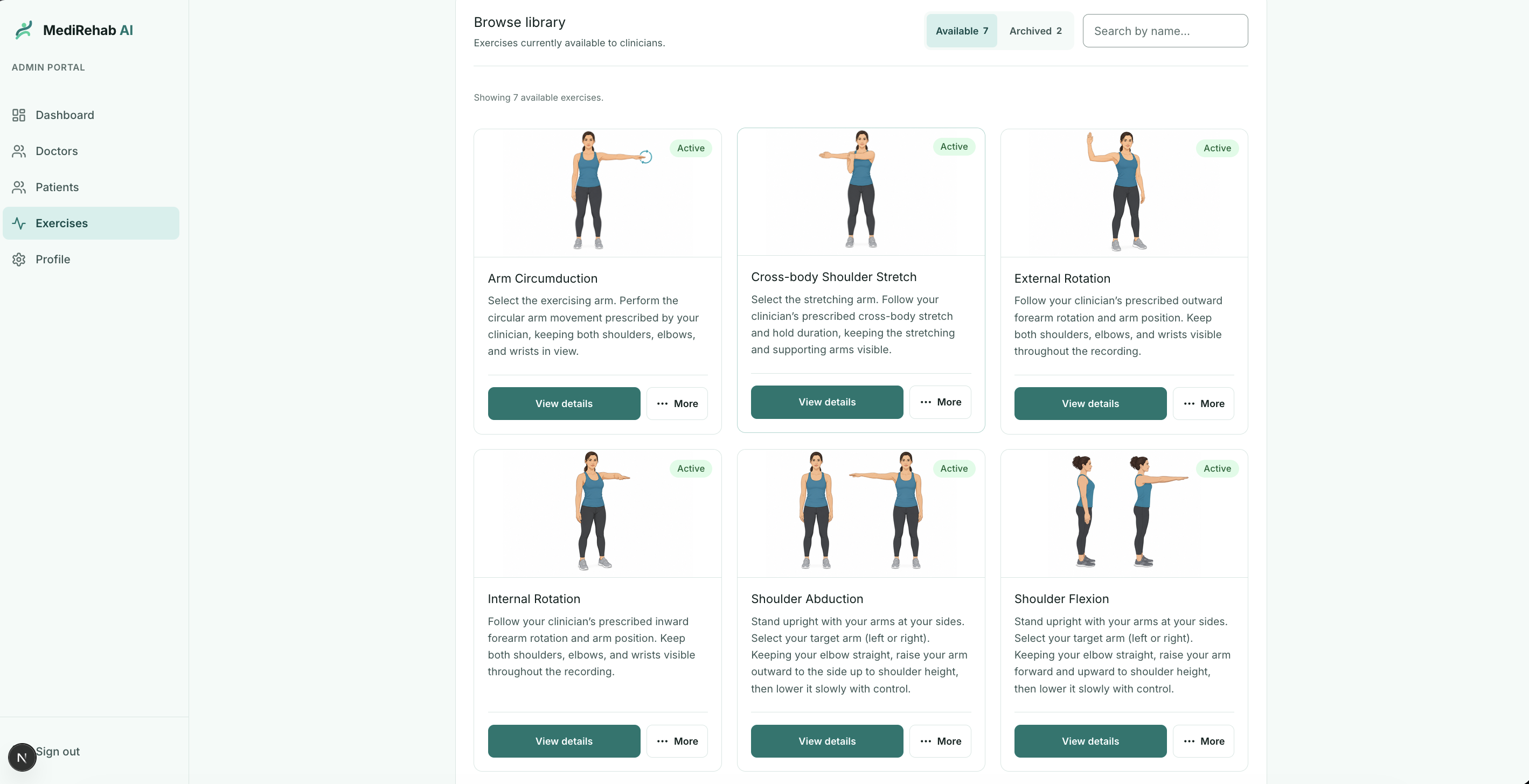
MediRehab AI is a full-stack rehabilitation monitoring platform that combines computer vision, movement tracking, clinical analytics, and AI-powered exercise evaluation in one dashboard.
 Click to zoom
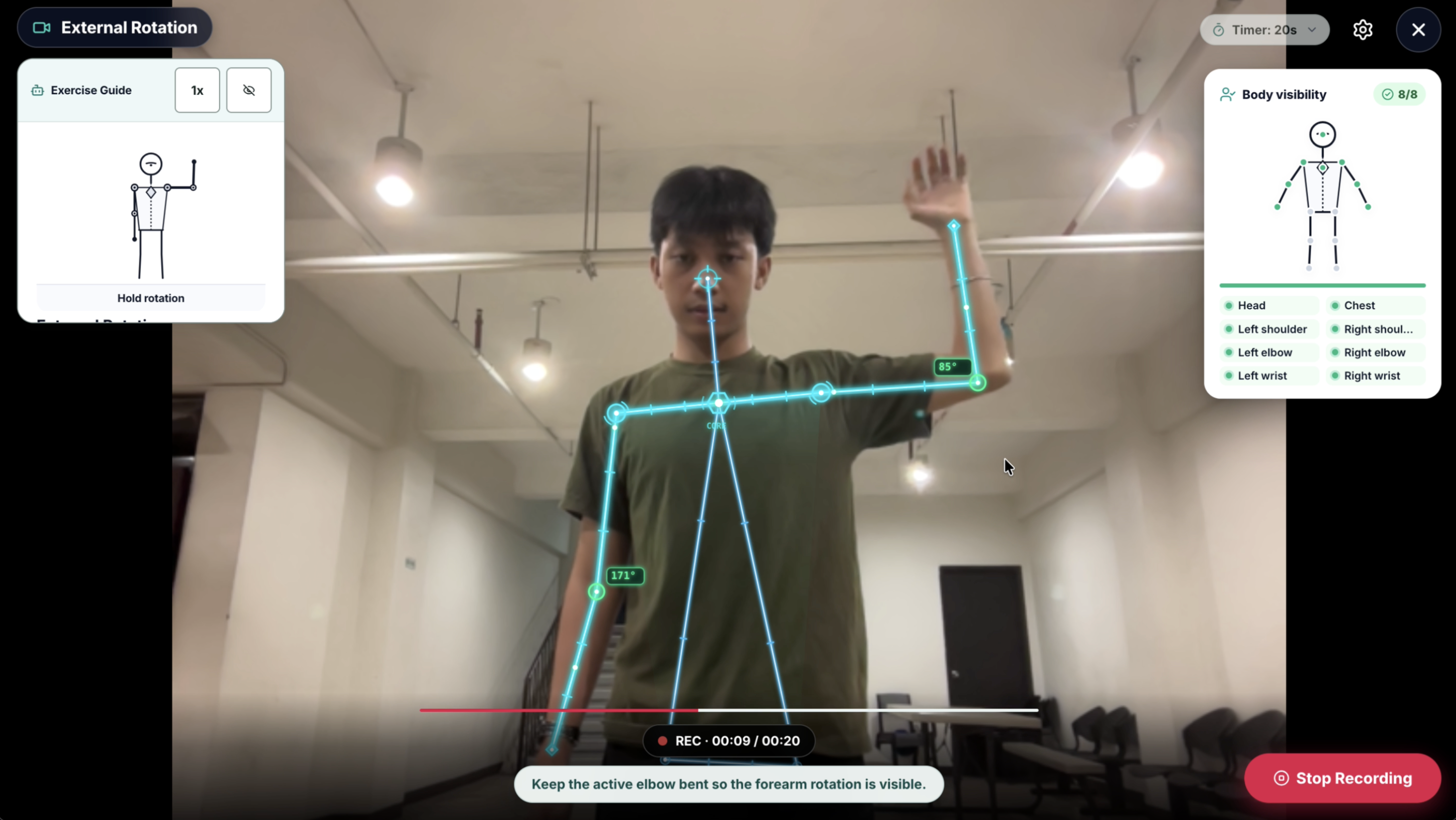
The system uses a standard RGB camera to detect upper-body landmarks and analyze movement patterns. Its AI service is built with Python and FastAPI, using PyTorch-based Transformer models to evaluate exercise performance. The platform also uses Next.js, TypeScript, and Express to deliver an interactive user interface.
 Click to zoom
Patients and physical therapists can monitor prescribed rehabilitation exercises involving unilateral and bilateral movements, including flexion, abduction, and rotation. The platform displays real-time joint angles, automatically counts repetitions, tracks range of motion, and provides form similarity scores to help users assess exercise performance and monitor recovery progress.